When reading posts like all of these, I can never be quite sure whether I'm exhilarated or depressed. The imagination takes flight, and I definitely enjoy fantasizing about the wines, but that's tinged by the despair of knowing that I'll never be able to taste the vast majority of them. It's quite distressing--the unfairness of it all.
It's enough to make me wish I were born seventy or a hundred years ago when these wines were affordable. I'd happily give up my various electronic devices in exchange. As long as no one else had them, I don't think I'd much miss the conveniences of modern life. This will sound odd coming from a blogger but, frankly, I'd probably be better off without a computer. And document review would be a lot less unpleasant in the absence of e-mail.
Wednesday, May 30, 2007
Age of Anxiety
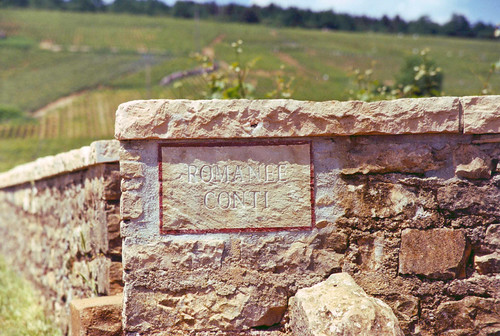

Just Because It's Summer Doesn't Mean You Should Drink Bad Wine
 Ever since the Constitutional Convention during that long Philadelphia summer of 1787, the languorous expanse between Memorial Day and Labor Day has been an indelible part of the rhythm of American life: the days of summer holidays and roadtrips, weekends at the Hamptons or the Shore, the party season at Gatsby's, the height of baseball season and Presidential campaigns, and lazy afternoons of Ultimate and barbecue. And accompanying that all-American tradition of outdoor grilling of late have been the obligatory articles from wine writers detailing the appropriate pairings for pulled pork, beef ribs, brisket and the like.
Wine writers for middle-brow newspapers tend toward the condescending, and never more so when recommending the "ideal summer wine." (Do they really drink Ravenswood themselves at home?) Exhibit A is Karen Page and Andrew Dornenburg's "Four Hot Prospects for Summer Sipping" in today's Washington Post, which offers recommendations for "BBQ" wines: "big, bold and quaffable." (No doubt a dozen other writers this week have arrived at a similarly egregious acronym.)
While I admit that many barbecue dishes, especially those slathered with thick sauces, require wines of some brashness and verve, just because the mercury's risen and you're drinking outside doesn't mean you've taken leave of your senses or, more importantly, your taste. Therefore, I humbly propose to offer four counter recommendations to Page and Dornenburg, all with the proviso that these wines are a bit splurgy and not meant for mindless quaffing. But, hey, you only live once, and with all that barbecue you've been eating, the man may come around sooner than you think.
As an all-purpose barbecue wine, Page and Dornenburg suggest the Sauvion Rosé d'Anjou ($10), a simple Loire rosé made from gamay and groslot. A perfectly respectable wine and probably the most apt of their four choices. But if you are indulging in the frivolity that is rosé, why not go all the way and have a Rosé Champagne, one of the most delightful mood wines there is (remember Cary Grant and Deborah Kerr in An Affair to Remember?). Rosé Champagne is an excellent match for barbecue, as it has the fruitiness, acidity, and bubbles to complement traditional sauces. Most of the famous Champagne houses put out a very good non-vintage rosé, and few are better than the Billecart-Salmon Rosé ($65), with refreshing cherry and strawberry flavors, good acidity, and impeccable balance.
For that "red-meat person" in your party, the Post writers recommend Ravenswood Icon Syrah ($17). The less that is said about the monstrosity that is Ravenswood the better (it's owned by the corporate giant Constellation Brands, whose portfoilo also includes Corona Extra and Corona Light). Admittedly, my next choice is a splurge wine, but it is also by far the finest New World Syrah or Shiraz I have ever tasted: the 1992 Henschke Hill of Grace ($300). Bearing little resemblance to the over-extracted, over-oaked Shiraz currently in favor in Australia, the Hill of Grace offers stunningly pure red fruit, with hints of spice and eucalyptus. Accessible now but still youthful, with a long life ahead.
As a pairing with "pork, chicken or virtually anything other than red meat," Page and Dornenburg suggest the Hogue Columbia Valley Riesling ($9), which throws in a dollop of Gewurztraminer for good measure. Yet if you're in the market for an off-dry Riesling, why not go for the real thing and pick out a good German Kabinett or Spatlese. German Rieslings are one of the few remaining bargains from Old World noble grapes, and a top producer like Ernst Loosen (whom I've written about previously) puts out excellent wines from top to (almost) bottom. Even mature German Rieslings can be found on the market for reasonable prices. The 1990 Weingut A. Gessinger Riesling Spatlese Zeltinger Sonnenuhr ($30) displays classic Middle Mosel notes of kerosene, apples, minerals, and honey and features a juicy mid palate and a nice, fresh acidity despite its maturity. An especially good pairing for foods inclining toward the sweet or the spicy.
And, finally, Conundrum ($27, né Caymus Conundrum) is the authors' choice of a somewhat more "upscale" white to pair with grilled fish or chicken ("its price tag means we save it for dinner with guests, who invariably thank us"; perhaps they're just being polite). Conundrum, which is blended from some combination of Viognier, Sauvignon Blanc, Chardonnay, Muscat or Semillon, has gone steeply downhill since the heady days of the early '90s when the wine garnered positive reviews from Robert Parker. For another proprietary white that is upscale enough to reserve for the table, I would suggest the 2003 Clos des Papes Chateauneuf du Pape Blanc ($60). It is a rich, full-bodied wine with floral notes and white fruit flavors that despite the scorching heat of the vintage has great acidity and fine poise. An incredibly versatile, food-friendly wine -- perfect for that West Egg dinner party.
Update: As Mark Slater, sommelier of Citronelle, helpfully points out in a post on Don Rockwell's board, Constellation Brands had a bigger hand in this article than I initially thought. In addition to distributing the Ravenswood Icon Syrah, Constellation ("THE LARGEST WINE AND SPIRITS COMPANY IN THE WORLD," as Slater notes) also distributes Hogue Cellars and owns Caymus Cellars, producer of Conundrum. (Sauvion is part of W.J. Deutsch & Son's portfolio.)
This certainly calls into serious question Page and Dornenburg's method of selecting wines for review, as well as the New York-based writers knowledge, or lack thereof, of the DC wine market.
Monday, May 28, 2007
Wine of the Week: 2005 Clos du Caillou Cotes du Rhone
Continuing with our theme of reasonably priced wines of the week, I tried a 2005 Cotes du Rhone from Clos du Caillou. This domaine, also known as Vacheron-Pouizin, is a small grower in Chateauneuf du Pape and the surrounding areas that has quickly been developing an excellent reputation. Much of this reputation comes, of course, from their Chateauneufs (tending toward a modern style) rather than from their other wines, but I decided to taste their least heralded wine: a plain Cotes du Rhone--not even a villages or their impressive Bouquet des Garrigues.
The wine is definitely young--it could probably use a year or two in the cellar. But it is very drinkable right now. It was a little forward, even brash, initially. After getting some oxygen in the glass it calmed down and came nicely into balance. Like almost any wine you can get at its price, it wasn't terribly complex (although it certainly was not dumb either). The bottom line is that this is a very enjoyable drinking experience with moderate, well-integrated fruit and an appropriate level of acidity to complement. It's perfect to drink after a hard day of work when looking for a wine to casually appreciate rather than to subject to the full intensity of one's intellectual and tasting capacity.
Update: The wine should be available in the neighborhood of $15.
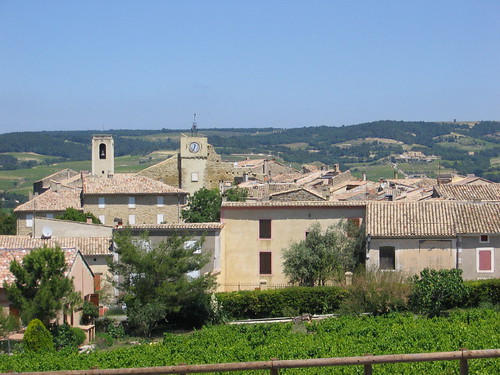
Parker: "I would not spend a dollar on '06 Futures"
Robert Parker has bluntly reaffirmed his pessimistic view of the U.S. market for 2006 Bordeaux, saying, "I would not spend a dollar on '06 futures."
These remarks, made at the Duquesne Club in Pittsburgh two weeks ago, come on the heels of his prediction earlier this month that "the 'futures' market in the USA will be largely a failure." (A self-fulfilling prophecy, perhaps?)
A weak dollar, combined with large expenditures on the outstanding '05 vintage and the availability of strong buys among the '03 Northern Medocs, all lead Parker to advise against any spending in the '06 en primeur campaign.
Curiously, Parker's latest column for Business Week offers his picks on "Where To Place Your 2006 Bordeaux Bets." He is less blunt for the "Executive Life" crowd than he was at the Duquesne Club, advising, "I wouldn't load up on 2006 futures, as the vintage is good but not great."
Nevertheless, Parker offers up his recommendations for futures worth a gamble if priced below $45: Branaire-Ducru, Malescot St.-Exupéry, Haut-Bailly, Duhart-Milon, Fleur Cardinale, Monbousquet, Smith-Haut-Lafitte and Clos de L'Oratoire.
Anyone care to bet on how many of these wines come in under that price point? (My prediction is three: Duhart-Milon, Fleur Cardinale and Clos de L'Oratoire.)
Friday, May 25, 2007
On the Map
This is great news. We can only hope that it will encourage efforts to further entrench the sense of place of American wines. Moreover, if American wines start to benefit from protection of the names of their geographic origins along with European wines, it can only increase the likelihood that American negotiators will be amenable to further protections in future trade deals.

A Toast to the Long Weekend
Classic Orson Welles ad for Paul Masson, the "Champagne King of California," abandoned after three sublimely loopy takes (Hat tip: Dan Tobin). Some of the greatest American screen acting on record.
Thursday, May 24, 2007
EU to Propose Ban on Chaptalization

Europe's Agriculture Commissioner has proposed banning chaptalization, the historic practice of adding sugar to wine during fermentation to boost alcohol levels and enhance a wine's body.
Mariann Fischer Boel is set to unveil a wide range of measures to reform Europe's ailing wine sector July 4 but previewed her proposals in remarks that can be found here (thank you, Jancis).
Chaptalization, while not as frequently utilized now as it was fifteen or twenty years ago, nevertheless remains common practice in less ripe vintages even among some of the very best producers of Burgundy and Bordeaux. As reported here, Pierre Lurton of Cheval Blanc chaptalized in 1998 to increase the alcohol level of 8 perecent of his crop by 1 degree. In the more challenging vintages of 1992 and 1997, Lurton added sugar to even more of his crop. And the practice is even more ingrained in the winemaking of Burgundy, where ripeness (outside of a freakish year like 2003 or the miraculous 2005 vintage) remains a perpetual challenge. (Of course, global warming may change all of that.)
Fischer Boel's proposed ban comes as part of the EU's intended reforms of the sugar industry, with lowered subsidies and production quotas intended to bring down the EU's surplus of sucrose. Though this was not specifically addressed, the practice of adding concentrated grape must to wine, as opposed to sugar, may remain untouched. She also argued that the EU needs to bring the European wine industry in line with the guidelines of the World Trade Organization and the International Organization of Vine and Wine (OIV), which both prohibit the use of sugar.
The other proposed reforms include:
-Extending the planting restrictions, now set to expire in 2010, until 2013
-Continuing the program of ripping out vines
-Removing subsidies for distilled alcohol made from industrial wines never intended to reach market
-Labelling the varietal and vintage on wine bottles
Fischer Boel famously said last year that Europe needs to allow producers to make "New World style" wines. These measures come as the EU struggles to come to grips with a crippling wine surplus.
Wednesday, May 23, 2007
Industrial Marketing
Apologies for my recent lack of posting. Work has been crazy the past week or so. Luckily Simon has been able to hold down the fort. He's been posting about one of the most objectionable techniques of industrial-style wine-making--the use of oak chips to impart overwhelming, fake flavors to wines that would otherwise be merely insipid, unbalanced, and badly textured.
But from my perspective that's the least of these wines' troubles. I can avoid drinking the wines, and their existence gives me something to criticize when feeling grumpy. On the other hand, I'm regularly subjected to their offensive marketing, in which I'm told that if only I drink the wines a certain classiness and sophistication will be added to my life. I'm also informed that I will have a delightful aesthetic experience. And, for whatever reason, the aesthetic particulars seem to be remarkably similar from bottle to bottle.
I have recently had the misfortune to come into possession (through no fault of my own) of two bottles of industrial-style Australian wine. The first is imported by an outfit called "The Country Vinter," in whose website are revealed operational details not entirely consonant with the picture of a barn on the frontpage (although they do peddle (pdf) some wines that I would be more than happy to drink). They describe the particular wine I received thusly:
It has oodles of berries on the nose with suggestions of plum and spice. The fruit and spice follows through to the palate, fills the mouth and finishes soft and velvety.
The second importer does not appear to have a website, but I am sure they are just as objectionable. They describe their wine as having:
Generous ripe berry flavors followed by a silky, spice finish.
We can conclude that the standard marketing formula promises plenty of berry flavors plus spiciness and a smooth finish. Those looking for some variety can choose between ripe or (presumably) unripe berry flavors and having their spiciness on the nose(!) and palate or on the finish. Perhaps there is also some meaningful difference between analogizing wine to velvet or to silk.
I wonder if these sellers have explicit contempt for the customers, since they seem to regard them as automatons who think "good wine" when the label repeats three rote characteristics. And it's amazing to me that this is an effective marketing regime--one so effective that it's worth it to competitors to mimic each other and split the audience rather than to appeal to a different consumer with some new strategy.
Of course, making fun of this sort of wine is easy to do. But if there is a larger point here, it is the foolishness of the tasting note, which this exercise shows to be ultimately no more meaningful than a numerical score.
Naming Names
In response to our post below on "oak alternatives," reader Phil from New York asks if we know of specific producers who use oak chips in their wine. This information is often tightly held in the industry, to say the least, as many wine lovers consider the practice taboo. Quite helpfully, though, the Wine & Vines issue on "oak alternatives" conducted a blind tasting of wines from known users of these controversial techniques.
The five producers who provided samples were: Romel Rivera, Corté Riva Vineyards, Santa Rosa, Calif.; Gordy Venneri, Walla Walla Vintners, Walla Walla, Wash.; Steve Pessagno, Pessagno Winery, Salinas, Calif.; Sean Larkin, Larkin Wines, Yountville, Calif.; and Clark Smith, GrapeCraft Wines, Sebastopol, Calif. (Have they no shame?)
Obviously, this is just the tip of the iceberg.
The Wine & Vines article, complete with the results from the blind tasting, can be found here.
House Wines
Today's Washington Post features a useful survey of a perennial topic: inexpensive wines for daily drinking under $15. To be honest, I've never thought much of the idea of a having an established "house wine" -- I like variety too much to buy multiple cases of a single, inexpensive wine and even for casual company like to serve something a little special. But I do like the idea an "occasional wine" -- wines for a particular mood or setting or season -- and many of the recommendations in the article (most from DC-area chefs and sommeliers) are wonderful suggestions for casual summertime drinking.
I must say, however, that I don't care much for the authors' -- Karen Page and Andrew Dornenburg -- choice of "house white": the "Dr. L" Riesling from Ernest Loosen in Germany ($12). Having tasted through most of Loosen's wines last year in the U.K., I found the 2004 "Dr. L" Rieslings clumsy, imbalanced, and lacking in freshness. The "Dr. L"s are Loosen's entry-level Rieslings and by far the weakest in his range. For a small step up in cost, one can drink far, far better from Loosen's truly impressive portfolio. For example, the 2004 Dr. Loosen Wehlener Sonnenuhr Kabinett -- balanced, elegant, and refreshing, with great minerality -- is available for around $17.
Spinning Oak Chips
 "Get the information out yourself, on your own terms, so you can set the terms of debate." The dictum that was page one of the Clinton White House's media playbook has now been appropriated by the wine industry with regards to the use of oak chips. As Eric Asimov reports in his latest dispatch, the trade magazine Wine & Vines devoted an entire issue last month to "oak alternatives" in the hopes that the industry can get out in front of the issue. The desired end, of course, is having the general public accept the much reviled practice of imparting traditional oak flavors in a wine through the use of oak chips, wooden blocks, powder, or barrel staves rather than the significantly more expensive process of traditional barrel aging.
Oak chips have long been used to flavor cheap wines, and the results are usually quite vile: wines with caricatured oak flavors without any of the nuance -- let alone the structure, texture, or body -- of wines carefully aged in new oak barrels.
But Wine & Vines editor Jim Gordon, in spin worthy of James Carville, argues: “People are going to find out sooner or later about all of this, so wouldn’t the American wine industry be smart to shape the story itself, rather than let some political opponent or competing region do so? The industry is probably much more frightened of the subject than consumers will be. Oak is as natural as it comes. Whether it surrounds and contains the wine or is immersed in it, it’s still just a natural flavoring from a tree that symbolizes strength and longevity."
It is all too easy to take part apart Gordon's statement ("symbolizes"? powdered tannins as "natural" as traditional oak barrels?) and, instead, I would like to turn to a more helpful framing of the issue from David Schildknecht of The Wine Advocate. Schildknecht, writing in a thread on the Squires Board, states that as with any manipulative technique in winemaking, there are "issues of taste and issues of authenticity, both matters of degree, and both with an irreducible component of human preference and volition."
Schildknecht surveys many of the oak alternatives currently available and finds some techniques to be much more successful than others in the context of low-cost alternatives for wines "never designed or priced to go through a traditional, expensive barrel-élevage." Yet Schildknecht concludes that even if he may find the taste of a particular wine enhanced by the use of oak blocks, he may, just the same, avoid that wine for its lack of authenticity: "I might, in short, think that its use represents cheating in the game with nature that is called 'making wine.'" Of course, as Schildknecht observes, the argument then turns to how to define "cheating" and how indeed to distinguish barrel aging from oak chips. This is precisely the line that Jim Gordon and the industry seek to blur with their talk of all forms of oak being "a natural flavoring."
Schildknecht, like Gordon, comes out in favor of greater openness about the issue, but for very different reasons. Schildknecht argues: "The irony is that as long as winemaking techniques and technology are viewed by a significant segment of the wine-drinking public ... as transcending or offending against some vague notion of 'tradition' - in short as taboo - the less information oenologists and winery owners are inclined to divulge about their practices and hence the more likely that you are buying and enjoying wine whose production involved methods you may be claiming are a tool of the devil!"
I am generally sympathetic toward Schildknecht's free market argument: have all the information available to the consumer and let the market decide. But I also agree with the decision of INAO (the French regulatory agency overseeing wine production) to ban the use of oak chips in all appellation contrôlée wines in the face of the EU's recent directive allowing their limited use. I firmly believe it is the place of a regulatory body with the historic mandate of INAO to hold the line with regards to the best French wines (if only INAO were as vigilant in limiting yields). Yet in the absence of such a regulatory scheme in the United States, the onus will rest upon the consumer to be informed and inquisitive and demand that the use of these techniques be fully disclosed.
And I am hopeful. As one contributor to the Squires Board thread put it: "... there's cheese and then there's 'cheese product,' process cheese like Kraft Singles. Maybe it's time for wine labels to reflect the same distinctions."
Tuesday, May 22, 2007
Compromised Winemaking
 In an earlier post, my co-blogger Jeffrey compares a Meursault-Genevrieres from Burgundy to a painting by Titian -- both aesthetic monuments demanding respect for their incomparable beauty, masterful execution, and uncompromising artistic ideals. Yet just as the art world has changed from the time of Titian, so too has the world of wine from the time of the monks. To take just one small facet of these seismic changes, the shift from artistic production for a coterie or a connoisseur-based audience -- the court, or landed gentry, or merely the very rich -- to production for a mass audience -- whether it be gallery audiences, or restaurant goers, or Napa tour buses -- has not been insignificant. In the case of wine, oenological science, particularly in the New World, has sought ways to compete with, and even improve upon, Old World tradition in the eyes of the marketplace. Aside from maybe the top three or four dozen producers worldwide, winemakers today are less like the Old Masters and more and more like Jeff Koons (see right).
This week's Grape Radio interview with winemaker Mike Trujillo (of Karl Lawrence and Sequoia Grove) provides uncommonly frank insights into the economic forces shaping the aesthetics of winemaking. While not exactly riveting radio in the vein of Gary Pisoni, the Trujillo interview paints a fascinating portrait of an upper-mid-tier producer struggling to navigate the demands of the contemporary marketplace and the taste of today's consumer. When asked point-blank if he makes compromises to accommodate the demand for wines that deliver instant gratification, Trujillo answers, "Yes." He admits: "If money didn't play a role in my career, my wines would be even more wound tight."
Trujillo also admits to embracing two controversial, interventionist techniques -- fining and filtration -- for the sake of delivering a reliable consumer product. (Fining is the addition of a substance like egg whites or skim milk to act as a comb to remove particles and clarify the wine. Filtration acts as a screen to remove bacteria and solid particles. Many winemakers and critics believe that both techniques strip wine of its character. Andrew Jefford writes that filtration "achieves stability at the cost of lost aroma and flavour" while fining "is rarely necessary after unhurried elevage.") "I'm a big proponent of filtration ... if it's done right," Trujillo says, as it serves to "polish up the wine, make it brilliant and make it real shiny and sparkly in the glass."
Now, admittedly, Trujillo has a more nuanced position, as he cites the need for sterilization and also argues that many winemakers who claim to produce unfiltered wines still use some method to achieve the same ends. Yet, as Jefford writes, almost all of the top domaines in Burgundy have long abandoned fining and filtration to no ill effect. It is interesting to observe, here, that it took the pressure of American journalists and importers like Robert Parker and Kermit Lynch to get producers to stop using these techniques, and many domaines produce special unfined and unfiltered cuvees for the USA market alone. Readers of Parker and Lynch have long accepted the gospel of unfined and unfiltered wines, while it is the European consumer who has lost sight of wine as an agricultural product and cannot bear the thought of a single, stray particle in the glass. Yet Trujillo either misreads the American market or is targeting a less sophisticated consumer when he says he needs filtration to deliver a sterile, stable product: "The customer is very important, and I need to deliver an expectation to this customer year after year after year."
While it is not exactly news that wines are being made in a more fruit-forward, consumer friendly style (or that artisans can and do compromise their ideals for market share), these trends do evoke an almost tragic sense of loss. If a Brian Loring says he makes wines in the super-ripe, high-octane style that he does because that's the style he enjoys and believes in, then more power to him. Let him stand or fall by his ideals. But there is something irredeemably sad about Trujillo's case when he says he cannot make the wine he ideally would produce.
And he is not alone. Even in Bordeaux and Burgundy, fewer and fewer producers are willing to make the old-school tannic beast that needs twenty years in the cellar to settle down and bring it into a remarkable balance worthy of the wait. The vin de garde may be becoming a thing of the past. And the true wine lover is in the position of the museum patron who, while recognizing that art must always speak to the present and that old forms need to be made new, nevertheless stands in awe before Titian's Europa and sighs: "Why can't they make them like this anymore?"
Monday, May 21, 2007
"They're real, and they're spectacular"
 Ever wonder what to do with wine that's been sitting out for four or five days? Actress Teri Hatcher has a novel solution -- she uses it to bathe. In a recent interview, the Desperate Housewives star reveals that she'll throw leftover wine into her bathwater for its supposed health benefits.
"When you're alone you open a bottle of wine, and then it's not really good after four or five days," Hatcher said.
"This make-up chemist that I know was talking about all the good properties in wine - antioxidants and stuff, exfoliating qualities - and she said, `Never throw it out, dump it in your bath,’" she added.
Hatcher, who famously eschews plastic surgery, advocates an all-natural lifestyle: "For as long as I can get away with it, I'd rather just be natural. The idea of putting stuff in your body is weird to me."
No tasting notes, alas, are available at this time.
Readers seeking more home-spun wisdom from the 42-year-old former Bond and MacGyver girl are best advised to consult Burnt Toast: And Other Philosophies of Life, Hatcher's 2006 memoir.
Wine Blogging Interactive Edition, Update
Jeffrey and I have decided to wait until next week to discuss the selected wine for our proposed blogospheric tasting. This is to allow readers an additional week to participate (and, admittedly, give us time to taste the wine ourselves). Please do let us know, though, via the comments feature if you've had the chance to pick up the wine, so we can gauge interest in the project (and also so we can see if people are actually reading our blog, or if they're just stumbling onto us via Google searches like "2005 Parker Bordeaux upgrades.")
To recap: the wine is the 2004 Las Rocas de San Alejandro Garnacha ($10). It is a special project from importer Eric Solomon, who sourced the grapes from 70-100 year old high-altitude vines. These vines are low-yielding, and the wine itself is unoaked, so it ought to deliver exceptional purity of fruit for the price point. As noted below, the wine is currently available at Calvert Woodley in DC and Sherry-Lehmann and Zachys in New York. Readers in other cities may want to consult Wine-Searcher. (We have no affiliation with any of these places, nor with Eric Solomon Selections.)
Wine of the Week: 2004 M. Magnien Bourgogne Rouge

"Rustic" is a term that I often find misused or misunderstood in wine writing. All too frequently, a wine is described as "rustic" to excuse its being underripe, thin, imbalanced, or overly acidic -- generally unable to compete by world-wide standards. Conversely, critics who favor more modern-styled wines tend to employ the term pejoratively to criticize wines for those very same negative qualities.
I would like to reclaim the word "rustic" as a positive, yet accurate, descriptor in wine writing by returning to an older definition of the word, one cited by the OED in the works of Shakespeare, Milton, Dryden, and Johnson: "Plain and simple; unsophisticated; having the charm of the country." The key element here, of course, is the notion of "charm." For me, rustic wines are those that while lacking in sheer richness, power, and sophisticated tannins nevertheless have a certain brightness, a liveliness, a distinctive character that make them eminently pleasurable to drink. Could "the charm of the country" perhaps even connote a sense of terroir?
Our wine of the week, Michel Magnien's 2004 Bourgogne Rouge ($20), is a wine that I would call "rustic" in the best sense. It displays a brilliant ruby color, and the classic pinot nose is dominated by raspberries and earth. It is medium-bodied, high in acidity, yet very well-balanced, with bright red fruit flavors. As this wine originates from the generic Bourgogne appellation -- meaning the grapes can be sourced from anywhere in greater Burgundy -- it inevitably lacks in concentration and sophistication. It does, however, offer great persistence and length for its level as well as an attractive core of ripe fruit. (Magnien is known for making Burgundies in a riper style, an asset in a difficult 2004 vintage that left many wines with a green or vegetal streak.) And most importantly, the racy acidity gives the wine a liveliness on the finish that freshens the palate and makes it a great food wine (it paired excellently with roast chicken). Red fruits and earth -- charm of the country, indeed.
Friday, May 18, 2007
On Vintage 2005: "Perfection ... doesn't have much character"
 Reading through Fiona Morrison's profile of Chambolle-Musigny, I was struck by the comments of leading producer Frédéric Mugnier on the 2005 Burgundy vintage: "There is something perfect about it but also something bothersome -- perfection almost doesn't have much character -- it needs aging to give it more character."
As Morrison reports in her October 2006 article for Wine & Spirits (a must-read; PDF file here), for Mugnier, "2004 is more intriguing; he finds the essence of Chambolle in the best wines." In contrast to the forgivingly perfect weather conditions in 2005, "2004 did not allow for errors, as it was riddled with traps such as risk of rot, disease and the temptation of excessively high yields."
It is not surprising that a producer of Mugnier's skill would find 2004 more interesting. 2004 was a winemaker's vintage, rewarding those with the most rigorous methods and highest standards of vinification while punishing lesser producers with under-ripe, austere wines. Reading through numerous producers' notes for 2005, I almost found a sense of boredom as they recited the same litany of vintage characteristics -- optimum weather, ample time for harvest, perfectly ripe, clean fruit with little, if any, sorting needed. Bruno Clair confessed that during the growing season, he had "nothing to do."
Yet it is interesting to juxtapose Mugnier's near disdain of "perfection," and his embrace of the challenges of a difficult vintage, with his professed non-interventionist approach to winemaking. "I'm wary of enology," Mugnier tells Morrison, and on his website states that "processes that traumatise the wine – over extraction, for example, or excessive woodiness – are limited to a minimum."
It becomes clear, then, that for Mugnier, the vigernon's work rests more in the vineyard than in the cellar. Tending the vines as a farmer -- with treatments against rot or pruning to reduce yields -- is the paramount work. Once the grapes are harvested and sorted, the "goal is to preserve the inherent quality of the grapes and not fiddle with them too much," as Morrison puts it. That is, to bring out the distinctive character of the vintage and the vineyard rather than achieve a certain generic standard of ripeness or concentration through interventionist techniques.
It also becomes clear what Mugnier means by perfection being "bothersome" and lacking "character." Young wines made from perfectly ripe fruit tend to lack transparency -- that is, they don't yield the distinctive characteristics of a particular vineyard, which are initially overwhelmed by blanket fruitiness. The "essence of Chambolle" is muted. Yet it is this quality of transparency -- "the ability to transmit clearly the underlying terroir," as Allen Meadows puts it -- that traditional Burgundy lovers prize most in their favorite wines.
Now Meadows is optimistic that the underlying terroir will shine through in these wines with age, but it may take twelve, fifteen, or twenty years for the very best '05s to reveal their distinctiveness and their greatness. People coming into Burgundy for the first time with the '05 vintage ought to know they have a long wait ahead of them. I shudder to think at the inevitable acts of infanticide that will be committed by those weaned on California pinot. Perhaps point chasers, if it is instant gratification that they desire, ought to follow Freddy Mugnier's advice and seek out wines from those many imperfect vintages.
Wine Blogging Interactive Edition
My friend Emily makes an excellent suggestion, namely that we should have a blogospheric wine tasting in which Simon and I suggest a wine that is available and affordable, allow people time to purchase and drink it, and then have everyone discuss it on the site afterwards using our delightful comments feature. So this post will suggest a wine. And in a few days, after our dear readers have had time to drink it, we'll put up another post in which to have a discussion.
Our first wine is a somewhat obscure red wine from Spain which we think might be a great value at $10: the 2004 Las Rocas de San Alejandro Garnacha from Calatayud. Calatayud is a DO (an officially classified Spanish wine region) in the province of Saragossa, which is Northeast of Madrid and was part of the Kingdom of Aragon back in the day. Garnacha is probably familiar to most Americans as Grenache, one of the primary grapes in Chateauneuf de Pape. (Chateauneuf is a great wine from the the southern Rhone and can be a real higher-end value if you're looking to splurge--but choose growers carefully.) This will be both Simon and my first time trying this wine, but you can probably expect it to be approachable with forward, dark fruit flavors balanced by earthiness. I can't read the number on the label (pictured in the link below), but I would bet it's pretty high in alcohol.
For DC area residents, the wine is available at Calvert Woodley, which is right near the Van Ness stop on the red line. So grab a bottle, drink it over the weekend, and we'll discuss it next week.
Update: For our New York readers, the wine is available both at Sherry-Lehmann (on Madison Ave. near 61st) and at Zachys in Scarsdale.
Further Update: The wine is also available at MacArthur Beverages in D.C.; Blanchards, Andover Liquors, and Nejaime's Wine Cellars in Massachusetts; and Woodland Hills, San Francisco Wine Trading Company, and K&L Wines in California. For other states, try a search for "Las Rocas Garnacha" on Wine-Searcher.
Thursday, May 17, 2007
Austria: Vintage Report 2006
Terry Theise has just posted his 2006 vintage report for Austria, and it is definitely worth a read. His conclusion? 2006 is "a vintage of muscle and density, often magnificent, occasionally overdone, usually superb. It is an especially resplendent vintage for Grüner Veltliner, but Rieslings are often astonishing as well."
Theise, a legendary wine importer, has an outstanding reputation for publishing definitive vintage reports and tasting notes for Germany and Austria, despite his own position in the trade. He doesn't hesitate to call a spade a spade, but he has also single-handedly brought countless hidden gems into the US market. Austria is a great source for good, inexpensive wines, and Theise's advice is well worth heeding.
The Dead Hand of the Law

When I asked the clerk whether they normally had a problem with 18-year-olds buying premier cru Meursault, he didn't seem to think that they did. I suppose in some sense this is just a minor annoyance, and showing my driver's license isn't even much of a hassle in situations where I'm already pulling out my credit card. But there's something morally objectionable about a society where controls on alcohol are enforced so rigidly that people have to produce identity documents before being allowed to purchase fine wines. Just as the government shouldn't be regulating what paintings its citizens are allowed to view, it shouldn't control other forms of aesthetic expression, of which fine wine is an example.
People under twenty-one should be allowed to drink wine as they please. If they can't, they will be unable to develop their palates. And they have a right to enjoy Meursault just as they have a right to view a painting by Titian. As best I can tell, the 21-year-old drinking age has also been entirely ineffective at its intended goal of preventing drunk-driving fatalities. To the extent that is a serious problem, the more reasonable thing to do would be to ban under-21 driving, which would likely more effective and would have other beneficial externalities (i.e., reducing driving).
But even if restrictions on teenagers were appropriate, the government shouldn't be regulating adults' wine consumption simply to prevent teenagers from drinking. Teenagers' supposed inability to drink responsibly has nothing to do with adults and doesn't justify subjecting them to identity checks, especially when the wine they're buying makes it almost certain that they're not underage and drinking irresponsibly.
A Humble White from Domaine de la Romanée Conti
 A Haute-Côtes de Nuits Blanc from Domaine de la Romanée Conti? Surely you jest. Or as the French would say, "C'est un blague ou quoi!" But as Neal Martin reports in his latest installment of Wine-Journal (now housed on eRobertParker.com; subscription, alas, required), this is no joke. This most famous of Burgundy domaines, producer of seven grand crus, is bottling a simple white wine from one of the humblest appellations in the region. But unlike the novelty bottling from Chateau Palmer I wrote on the other day, this is solely a charitable venture from Aubert de Villaine, co-owner of DRC, as all of the proceeds will be donated for the restoration of the historic monastery of Saint Vivant.
There have been scattered sightings of the bottling reported on French wine boards for the past few years, but Martin's, I believe, is the first major report in English. Further details on the venture can be found here in French and Japanese. For those without either language, here's my schoolboy's rendering from the French (corrections heartily welcomed):
The Monastery of Saint-Vivant is situated above a splendid site behind the Côte de Nuits and Vosne-Romanée. Founded around the year A.D. 900 by a vassal of the Dukes of Burgundy, and attached to the Abbey of Cluny in the 11th century, it is a "haut-lieu" of Burgundy, unfortunately in ruins today, which the Association "Abbey of Saint-Vivant" has undertaken for some years to preserve.
This Haute-Côtes de Nuits is made from vines situated in an enclave in the abbey. Proceeds from the sales of the bottles are given to the Assocation, which will devote them entirely to the work of preservation.
Martin declines to give a tasting note for the 2003, writing " it seems inappropriate for a wine not commercially available." It is quite unclear whether DRC's famously rigorous methods can work a kind of magic with vines of such humble pedigree. Martin reports that only 60 cases are produced annually, with most going to the French restaurant Lavinia. Yet the British scribe was perhaps a little naive in declaring: "do not expect to see them on eBay." A quick Google search revealed that indeed one bottle of the 2000 DRC Haute-Côtes de Nuits Blanc was offered on eBay.fr this March! (Bidding went up to 25 euros, below the reserve price; the picture above is from the now-concluded auction). Happy hunting!
